Is DPT Required for Filipino PTs to Work in the USA?
For many Filipino physical therapists dreaming of better career opportunities abroad, the United States stands out as the top destination. With competitive salaries, advanced clinical environments, and long-term immigration options, physical therapy jobs in the USA offer a future that few countries can match.
Yet one question continues to stop qualified Filipino PTs in their tracks:
“Is DPT required for Filipino PTs to work in the USA?”
Quick Summary
Many Filipino physical therapists believe they must earn a Doctor of Physical Therapy (DPT) to work in the United States—but this is one of the biggest misconceptions about US licensure.
In this guide, we break down whether a DPT is truly required for Filipino PTs, explain how credential evaluation and state licensure work, and outline the real pathway on how to become a physical therapist in the United States.
Learn how Filipino PTs can qualify, pass the NPTE, and build a long-term career in the US with expert guidance from Grandison Therapy.
Table of Contents
Understanding the DPT in the US Context
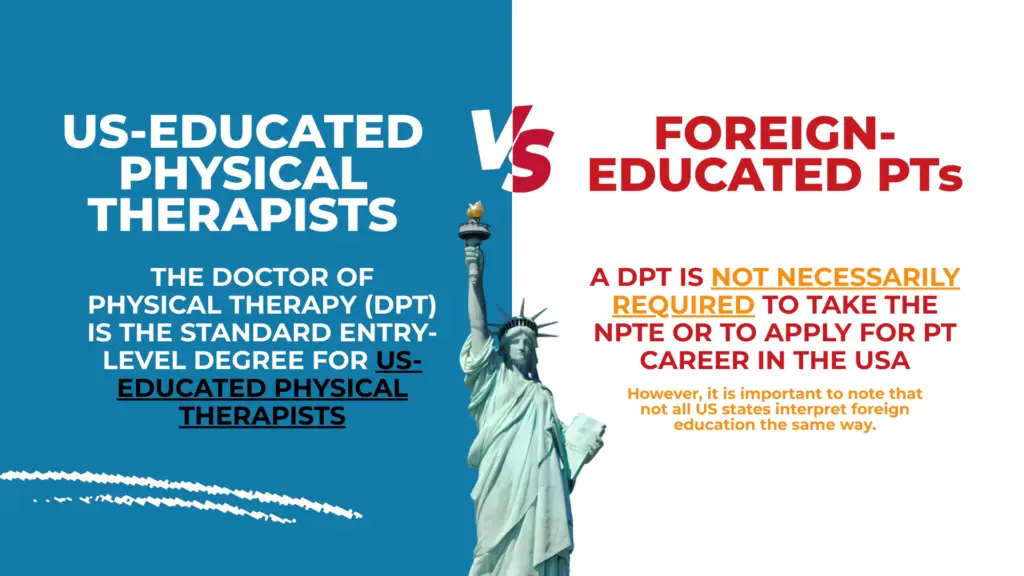
In the United States, the Doctor of Physical Therapy (DPT) is the standard entry-level degree for US-educated physical therapists. Since the mid-2010s, American universities phased out bachelor’s and master’s programs in favor of the DPT.
This fact alone has led many Filipino PTs to believe:
A DPT is mandatory for everyone
Their BSPT or MSPT is no longer valid
Studying again in the US is the only option
But this assumption overlooks a crucial distinction.
The Key Difference: US-Educated vs Foreign-Educated PTs
The DPT requirement applies primarily to US-educated physical therapists, not automatically to foreign-educated PTs.
For international applicants, including Filipino PTs, US state boards ask a different question:
“Is your physical therapy education substantially equivalent to a US entry-level PT education?”
Licensing boards determine eligibility through a credential evaluation, not by diploma title alone.
In short:
The degree title (BSPT, MSPT, DPT) matters less
The content, length, and clinical training matter more
So, Is DPT Required for Filipino PTs to Work in the USA?
The short answer: No, for a foreign-educated PT, a DPT is not required to take the NPTE or to apply for PT career in the USA
Instead, Filipino PTs must:
Pass a credential evaluation
Meet state-specific licensure requirements
Pass the NPTE
Secure legal employment and visa sponsorship
Many Filipino PTs have successfully obtained US licensure without earning a US DPT.
Why Filipino PTs Are Often Strong Candidates
Filipino physical therapists are widely recognized in the US healthcare system for their:
English-medium education
Strong foundation in anatomy, kinesiology, and rehabilitation
Extensive clinical internship hours
Cultural adaptability and patient-centered care
Many BSPT programs in the Philippines were historically aligned with US curricula, making Filipino PTs well-positioned for credential equivalency when the process is handled correctly.
The Role of Credential Evaluation
Before Filipino PTs can take the NPTE or apply for licensure, they must complete a foreign credential evaluation through an approved agency like FCCPT, IERF, and ICD.
This evaluation examines:
Academic coursework
Credit units and subject distribution
Clinical internship hours
Date of graduation
Scope of practice alignment
Possible outcomes:
Substantial equivalency → proceed to NPTE
Minor deficiencies → remedial coursework
Major deficiencies → alternative pathways advised
Most Filipino PTs fall into the first or second category, especially with proper guidance.
Why State Selection Is Critical
Not all US states interpret foreign education the same way.
Some states are:
More flexible with foreign-educated PTs
Clearer in their licensure pathways
Faster in processing applications
Other states are:
More restrictive
Slower
Less predictable for international applicants
Choosing the wrong state can result in:
Unexpected deficiency findings
Requests for unnecessary coursework
Years of delay
This is one of the biggest mistakes Filipino PTs make when applying independently.
Do Any States Require a DPT for Foreign PTs?
No US state explicitly lists “US DPT required” in its laws for foreign-educated PTs.
However, New York is widely known for applying one of the strictest interpretations of educational equivalency, often requiring DPT-level alignment.
Because of this, many Filipino PTs strategically apply to other states first, obtain licensure and experience, and then pursue endorsement later if needed.
NPTE: The Real Gatekeeper for Filipino PTs
While the DPT issue gets the most attention, the National Physical Therapy Examination (NPTE) is often the bigger challenge.
Common struggles for Filipino PTs include:
US-style clinical reasoning questions
Computer-based testing format
Time pressure
Differences in documentation and practice standards
Many capable PTs fail the NPTE not because they lack knowledge, but because they lack structured preparation designed for foreign-educated applicants.
Immigration and Employment: A Major Advantage of the USA
One of the reasons physical therapy jobs in the USA remain so attractive is the availability of long-term immigration pathways.
Filipino PTs may qualify for:
H-1B work visas
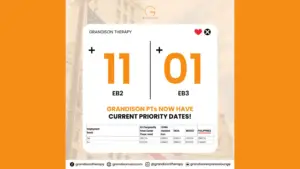
EB-2 or EB-3 employment-based green cards
Physical therapists are often classified as Schedule A healthcare professionals, which can significantly speed up immigration processing compared to other occupations.
This means Filipino PTs can:
Work legally
Bring immediate family
Build permanent lives in the US
Why Many Filipino PTs Get Stuck (and How to Avoid It)
Despite eligibility, many Filipino PTs:
Rely on outdated Facebook advice
Choose states without understanding requirements
Spend money on unnecessary programs
Work with unverified recruiters
Miss immigration opportunities
The US system is not impossible—but it is complex and unforgiving without expert guidance.
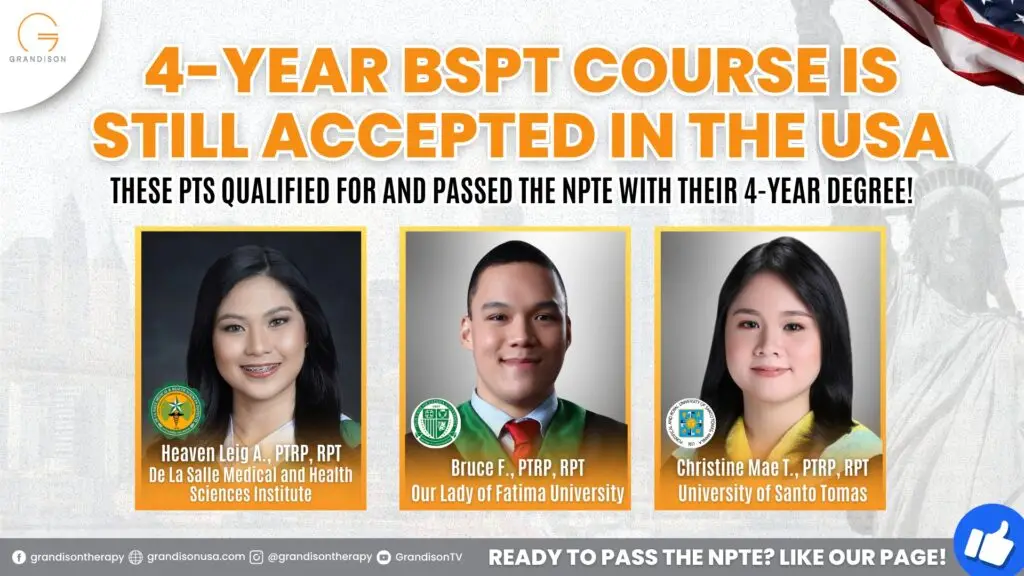
How Grandison Therapy Helps Filipino PTs Work in the USA (Without a DPT)
Grandison Therapy specializes in helping foreign-educated physical therapists, particularly Filipino PTs, successfully transition into the US healthcare system.
What Makes Grandison Different
Strategic State Selection
Identifies states favorable to Filipino PTs
Avoids unnecessary DPT barriers
Credential Evaluation Support
Pre-assessment before submission
Reduced risk of major deficiencies
NPTE Review Program
Designed specifically for international PTs
Focused on first-time pass success
Visa and Employment Sponsorship
H-1B and green card pathways
Long-term career placement, not short contracts
End-to-End Guidance
From application to deployment
Cultural and professional orientation for US practice
Grandison doesn’t just help PTs “apply”—they help PTs build sustainable careers in the USA.

Is DPT required for Filipino PTs to work in the USA?
Can a BSPT from the Philippines be accepted in the USA?
Which US state is hardest for foreign PTs?
Is NPTE mandatory for all PTs?
Can Filipino PTs get a green card?
Do I need US clinical experience before applying?
Final Thoughts: Is DPT Required for Filipino PTs to Work in the USA?
Don’t Let the DPT Myth Stop You
The belief that a US DPT is mandatory has discouraged countless qualified Filipino PTs from pursuing physical therapy jobs in the USA.
The reality is this:
Most Filipino PTs do not need a DPT
Strategy matters more than degree title
Guidance makes the difference between delay and success
Ready to Find Out If You Qualify for a Physical Therapy Job in the USA?
If you’re a Filipino physical therapist wondering whether your education is “enough,” guessing is the most expensive mistake you can make.
Let experts evaluate your pathway properly.
- Explore your eligibility to work in the USA as a Physical Therapist
- Sign up with Grandison Therapy and start your US journey the right way
With the right partner, your American PT career is not just possible—it’s achievable.