Physical therapist jobs abroad offers international PTs a powerful opportunity to build a long-term career in the United States—but success depends on understanding the US licensure, exam, and immigration process.
This guide explains why the USA remains the #1 destination for physical therapists seeking jobs abroad, outlines the step-by-step pathway to US PT licensure, and breaks down common challenges international applicants face.
You’ll also learn how Grandison Therapy supports internationally educated physical therapists through NPTE preparation, visa sponsorship, and guaranteed US employment—helping you move from overseas practice to a licensed PT career in America with clarity and confidence.

For physical therapists seeking opportunities abroad, many countries offer overseas employment—but the United States remains the #1 destination for international PTs who want long-term career growth, financial stability, and global professional recognition.
Unlike short-term or contract-based roles in other countries, physical therapy jobs in the USA offer a clear pathway to licensure, permanent residency, and career advancement.
Here’s why the USA continues to stand above all other destinations for physical therapists looking to work abroad:
Physical therapists in the United States earn significantly higher salaries compared to most other countries offering overseas PT jobs.
In the US, licensed PTs benefit from:
Competitive annual salaries
Overtime and productivity bonuses
Comprehensive health insurance
Paid time off and retirement benefits
For international PTs, this means not just better pay—but the ability to support family, build savings, and achieve long-term financial security.
Unlike many countries where foreign-trained PTs face unclear or restrictive recognition processes, the US offers a well-defined licensure pathway for internationally educated physical therapists.
While rigorous, the US licensure process is transparent and standardized:
Credential evaluation
National licensure exam (NPTE)
State board approval
With the right guidance, international PTs can plan their pathway with confidence and avoid unnecessary delays.
One of the biggest reasons the USA remains the top choice for physical therapists working abroad is the availability of employment-based immigration options.
Physical therapists may qualify for:
H-1B work visas
EB-2 or EB-3 green card pathways
Unlike many countries that only offer temporary work permits, the US allows PTs to build a future—bringing families, securing permanent residency, and eventually applying for citizenship.
US licensure is globally respected. Physical therapists who have practiced in the United States gain:
Exposure to advanced clinical standards
Experience with evidence-based practice
Strong international career credibility
Many PTs find that US experience opens doors to leadership roles, specialization, or global opportunities later in their careers.
The US healthcare system provides physical therapists with:
Access to modern facilities and technology
Diverse patient populations
Opportunities to specialize in orthopedics, geriatrics, sports rehab, neuro rehab, and more
This environment supports continuous learning, professional autonomy, and long-term career satisfaction.
From outpatient clinics and hospitals to skilled nursing facilities and home health, physical therapy jobs in the USA are available across:
Urban and rural areas
Multiple states with varying licensure timelines
Different practice settings to match career goals
This flexibility allows international PTs to choose pathways that align with lifestyle, family needs, and professional interests.
Unlike other countries where foreign professionals are often left to navigate systems alone, the US has established recruitment and staffing agencies that specialize in physical therapist jobs abroad.
With the right partner, international PTs receive support in:
Licensure and exam preparation
Visa processing
Job placement
Relocation and cultural transition
This ecosystem makes the US far more accessible than many other overseas destinations.
When comparing physical therapy jobs abroad, the USA consistently offers the best combination of:
Earning potential
Professional respect
Immigration stability
Career advancement
Quality of life
For physical therapists who want more than just an overseas contract—who want a career, a future, and global credibility—the United States remains the #1 choice.
International PTs may qualify for US licensure and employment if they:
Hold a Bachelor’s or Master’s degree in Physical Therapy
Graduated from a recognized PT program outside the US
Have clinical training comparable to US standards
Meet English language proficiency requirements
Are eligible to sit for the NPTE (National Physical Therapy Examination)
Filipino physical therapists, in particular, are highly regarded in the US due to strong English proficiency, solid clinical education, and adaptability to American healthcare culture.



All foreign-educated PTs must undergo a credentials evaluation to determine whether their education is substantially equivalent to a US Doctor of Physical Therapy (DPT) program.
Some applicants may be required to complete deficiency courses or bridge programs depending on state requirements.
Each US state has its own physical therapy licensing board. Requirements may vary in terms of:
Accepted credentialing agencies
English test scores
Jurisprudence exams
Temporary permits
Choosing the right state early is critical—and this is where expert guidance matters.
The NPTE is the primary licensure exam for PTs in the US. It is known for its rigor and high failure rate among international candidates without structured preparation.
Key facts:
4-Year BSPT graduates can be eligible to take the exam as long as their units/subjects are equivalent to US Standards
Administered multiple times per year
Can be taken in USA or Canada
Many international PTs require dedicated NPTE review programs to pass on their first attempt.
Some states require TOEFL or IELTS scores, especially for foreign-educated applicants. Minimum scores vary by jurisdiction.
Once licensed or license-eligible, international PTs can be hired through employer sponsorship. Common visa pathways include:
H-1B visa (specialty occupation)
EB-2 or EB-3 immigrant visa (green card)
Physical therapists are often classified as Schedule A occupations, allowing faster green card processing compared to many other professions.
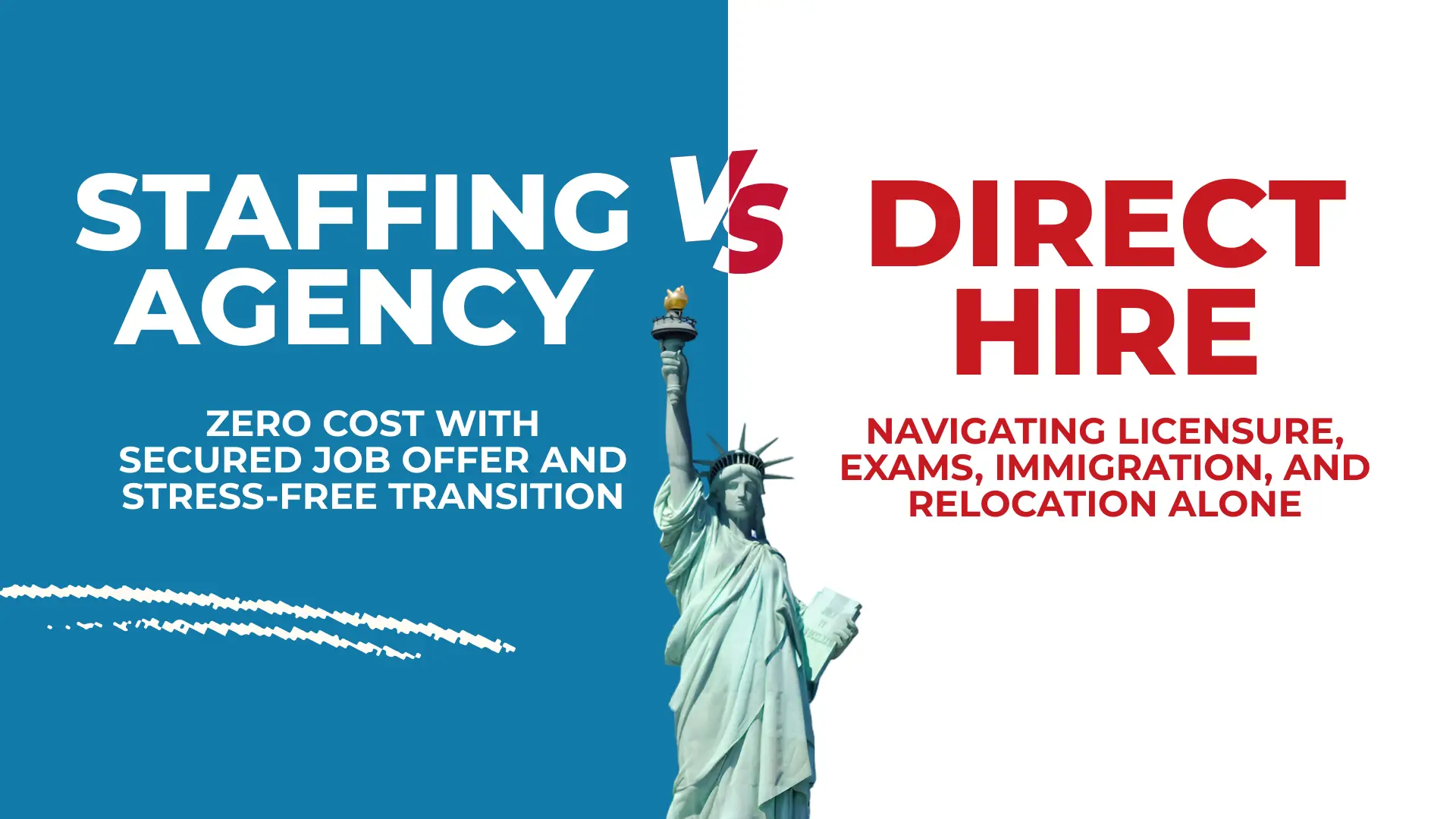
International PTs typically choose between:
Direct hire with a US employer
Staffing or recruitment agencies specializing in foreign healthcare professionals
While direct hire may seem appealing, it often leaves applicants navigating licensure, exams, immigration, and relocation alone.
Working with an experienced agency offers:
End-to-end licensure support
NPTE exam preparation
Visa sponsorship and legal coordination
Job placement with vetted US employers
Relocation and cultural transition assistance
Grandison Therapy specializes in physical therapist hiring abroad, with a proven track record of helping international PTs transition successfully to the US healthcare system.
Comprehensive Licensure Support
State selection guidance
Credential evaluation assistance
Application tracking and compliance
Structured NPTE Review Program
Exam-focused curriculum
Test-taking strategies tailored for foreign-educated PTs
High first-time pass rates
Visa & Immigration Sponsorship
H-1B and green card pathways
Support through retrogression and priority date challenges
Coordination with immigration attorneys
Guaranteed US Employment
Placement with reputable US clinics, hospitals, and rehab centers
Competitive salary packages
Long-term career pathways, not short-term contracts
Cultural & Professional Transition Support
US workplace orientation
Clinical documentation standards
Patient communication and ethics training
For many Filipino PTs, Grandison serves as a true career partner—not just a recruiter.
Physical therapist jobs abroad is not just about passing exams or getting a visa—it’s about building a sustainable, respected career in one of the world’s most advanced healthcare systems.
If you are an internationally educated physical therapist looking to work in the USA, Grandison Therapy provides the structure, support, and sponsorship you need to succeed.
Explore your eligibility and start your US PT journey with Grandison today.